Advanced Open Water Diver Certification: Complete Guide to Deeper Diving
The PADI Advanced Open Water Diver certification strenghten your diving skills and allows you to explore deeper dive sites (30m/100ft). Learn about the course, adventure dives, and diving specialties.
What is Advanced Open Water Diver?
The Advanced Open Water Diver (AOWD) certification is the second level of recreational scuba diving training, designed to expand your diving skills, confidence, and horizons beyond the entry-level Open Water Diver certification.
Issued by PADI and other major diving organizations, this credential increases your maximum diving depth from 18 meters (60 feet) to 30 meters (100 feet) and grants access to a world of dive sites previously unavailable to entry-level divers.
Unlike its name might suggest, you don't need to be an "advanced" or experienced diver to pursue this certification. Many divers complete their Advanced Open Water training immediately after finishing their Open Water Diver course, with some doing both courses over consecutive weekends or during a single diving vacation.
The Advanced Open Water Diver course is fundamentally different from the Open Water Diver course in structure and approach.
While the Open Water course focuses on teaching foundational scuba skills and safety fundamentals, the Advanced course is a practical, adventure-focused program with minimal classroom time and no written exams. The Advanced Open Water Diver consists of five "Adventure Dives", two required and three flexible:
- Required: Deep Diving
- Required: Underwater Navigation
- Flexible: Adventure dive you choose
- Flexible: Adventure dive you choose
- Flexible: Adventure dive you choose.
Before going into details about the five adventure dives, we should clarify why it is important to take the Advanced Open Water Diver certification.
Why Take the Advanced Open Water Diver Course?
There are numerous compelling reasons to pursue Advanced Open Water Diver certification:
Access to World-Class Dive Sites
Many of the world's most spectacular dive sites require Advanced Open Water Diver certification or above. Notable examples include:
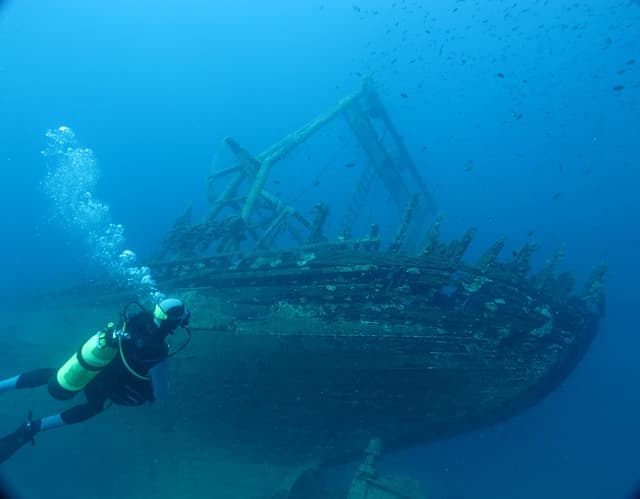
Wrecks: The legendary WWII shipwrecks in Chuuk Lagoon (Truk Lagoon) lie at 30-40 meters (100-130 feet). Without Advanced certification, these historic dives are inaccessible. Wreck diving offers a unique blend of history, marine life, and exploration that captivates divers worldwide.
The Blue Hole, Belize: This iconic dive site is only recommended for Advanced-certified divers due to its 30-meter depth and specialized structure.
The Angelita Cenote, Mexico: At 30 meters, you descend through a surreal white cloud of sulfur and hydrogen before entering a layer of crystal-clear freshwater—a unique experience unavailable to Open Water Divers.
Deep Reef Systems: Many vibrant coral formations and their associated marine life congregate at depths beyond the Open Water Diver limit.
Liveaboards: Many dive vacation liveaboards require Advanced Open Water Diver certification or above, restricting open-water-only certified divers from premium diving vacations.
Encounter Unique Marine Life
Certain species live, feed, or gather in deeper water. By diving to 30 meters, you access new marine encounters:
- Hammerhead sharks in the Galápagos Islands
- Manta rays at the famous Boiler dive site near Socorro Island
- Deep-water fish species that don't venture into shallow waters
- Specialized cleaning stations where larger pelagic fish gather at depth
- Deep-sea corals and other organisms adapted to deeper environments
Improved Diving Skills and Confidence
The Advanced Open Water course is designed to build on your foundational skills and develop your abilities as a diver. The structured approach with instructor guidance allows you to:
- Refine buoyancy control
- Master underwater navigation with compass and visual techniques
- Develop better air management and breathing habits
- Build confidence in deeper water
- Experience different diving specialties to find your passion
Specialization and Personal Growth
The Advanced course's "sampler platter" structure allows you to test different diving specialties without committing to full specialty courses. This exploration often leads to:
- Discovering a new diving passion (night diving, wreck diving, photography)
- Earning credit toward PADI Specialty certifications
- Developing a well-rounded skill set
- Finding your diving niche within the broader diving community
Continued Progression
The Advanced Open Water Diver certification is a crucial stepping stone in the diving progression pathway. Completing this course positions you to:
- Pursue the PADI Master Scuba Diver designation
- Take advanced specialty courses
- Progress toward instructor training if interested
- Access technical diving training (TecRec courses) at greater depths
Advanced Open Water Diver vs. Open Water Diver: Key Differences
| Aspect | Open Water Diver | Advanced Open Water Diver |
|---|---|---|
| Depth Limit | 18 meters (60 feet) | 30 meters (100 feet) |
| Prerequisite | None | Open Water Diver cert |
| Course Duration | 3-4 days | 2-3 days (can spread out) |
| Total Dives | 4 dives | 5 dives |
| Classroom/Theory | Extensive (5 modules) | Minimal (6-8 hours eLearning) |
| Written Exam | Yes, required | No exam |
| Mandatory Skills | Full fundamental curriculum | Deep diving, Navigation |
| Elective Options | None | 3 of 25+ adventure dives |
| Minimum Age | 10 years | 15 years (12 for Junior) |
| Training Structure | Foundational skills | Practical specialization |
The most significant difference is the approach: Open Water Diver training transforms someone who has never dived into a certified scuba diver, while Advanced training takes that certified diver and expands their capabilities and experience through practical, hands-on training focused on interesting specialties.
The Five Adventure Dives Explained
The heart of the Advanced Open Water Diver course is the five Adventure Dives. Each dive focuses on a specific skill or activity, and two are mandatory while three are your choice.
Mandatory Adventure Dives
1. Deep Dive (Required)
The Deep Adventure Dive is one of two mandatory dives and represents your first experience diving beyond the Open Water Diver depth limit. During this dive, you'll:
- Descend to depths between 18-30 meters (60-100 feet)
- Experience deeper water conditions and physiological effects
- Practice gas management at depth
- Learn about nitrogen narcosis (a phenomenon that can occur at deeper depths, sometimes called "rapture of the deep")
- Develop skills for deeper dive planning
- Practice buoyancy control in deeper water
- Experience changes in light and marine environment
The Deep Dive is carefully structured with an instructor to ensure you build confidence while staying safe. Your instructor will guide your descent, monitor your well-being, and help you manage the physiological and psychological aspects of deeper diving.
2. Underwater Navigation Adventure Dive (Required)
The Navigation Adventure Dive develops one of the most practical and valuable skills in scuba diving: the ability to navigate underwater accurately. During this dive, you'll:
- Learn compass navigation on land before entering the water
- Practice underwater compass use and navigation techniques
- Develop visual navigation skills using natural landmarks
- Learn to navigate using time, kick-cycles, and distance estimation
- Practice compass headings and course corrections
- Understand reciprocal navigation (finding your way back)
- Build confidence in your ability to navigate independently
This skill is invaluable for all subsequent diving. Good navigation skills allow you to explore dive sites with confidence, locate specific points of interest, and safely return to your entry point—critical for independent diving.
Choosing Your Three Elective Adventure Dives
After completing the two mandatory dives, you select three additional Adventure Dives from 25+ options. This flexibility allows you to customize your Advanced course to match your interests and goals. Here's a guide to popular choices:
Digital Underwater Photography
If you want to capture and share your underwater experiences, this Adventure Dive is invaluable. You'll learn:
- How to operate underwater cameras and housings
- Composition and lighting techniques
- White balance and color correction
- Common beginner mistakes to avoid
- Video recording and editing basics
- Equipment selection and care
This dive credits toward the PADI Digital Underwater Photographer Specialty, meaning you'll need just one more dive to complete that specialty certification.
Peak Performance Buoyancy
Mastering buoyancy control is one of the most important skills for efficient, safe, and environmentally responsible diving. In this Adventure Dive, you'll:
- Develop precise buoyancy control
- Learn proper weighting and BCD inflation techniques
- Practice hovering at depth
- Improve overall diving efficiency
- Reduce air consumption through better body control
- Develop confidence in your ability to maintain depth
Instructors consistently recommend this dive to students because improved buoyancy fundamentally improves all subsequent dives.
Night Diving
Diving at night opens an entirely new underwater world. Many divers are initially nervous about night diving, but this Adventure Dive, with instructor guidance, reveals why night diving is so rewarding. You'll:
- Experience how the underwater world transforms after dark
- Learn nighttime safety procedures and equipment
- Practice using dive lights effectively
- Discover nocturnal marine life unavailable during day dives
- Build confidence in low-light conditions
- Explore dive sites you've already visited, but in a completely different way
Wreck Diving
For history enthusiasts and adventure seekers, wreck diving is captivating. This Adventure Dive teaches you:
- How to safely explore shipwrecks and aircraft
- Navigation techniques specific to wreck structures
- Awareness of entanglement hazards
- How to preserve delicate wreck ecosystems
- The history and stories of famous wrecks
- Technical considerations for wreck diving
Drift Diving
Many world-class dive sites involve moderate to strong currents. Drift diving teaches you to dive effectively in current, opening access to sites like:
- Deep ocean channels with exciting marine encounters
- Reef drift dives with abundance of life
- Blue water dives with pelagic species
- High-current environments that would be dangerous without proper training
You'll learn current awareness, fin techniques, and safety procedures specific to drift diving.
Fish Identification
Understanding the marine life you encounter dramatically increases diving enjoyment. This Adventure Dive provides:
- Knowledge of common fish species in your diving region
- Behavior patterns of different species
- Identification techniques and characteristics
- Ecological relationships and feeding habits
- Understanding of seasonal species variations
Search & Recovery
This practical specialty teaches valuable rescue and recovery techniques:
- Systematic underwater search patterns
- How to safely locate and recover objects
- Proper rigging and lift bag use
- Buoyancy management with recovered objects
- Legal and ethical considerations in recovery
Other Popular Options:
- Enriched Air (Nitrox): Extend bottom time at depth
- Dry Suit: Dive in cold water with thermal protection
- Boat Diving: Learn procedures specific to boat diving operations
- Underwater Naturalist: Study marine life and ecosystems
- Delayed Surface Marker Buoy (DSMB): Deploy surface signaling devices
- Cavern Diving: Explore cavern environments (with appropriate limitations)
- Shark Conservation: Learn about sharks and contribute to conservation
Course Requirements and Prerequisites
Who Can Take the Advanced Open Water Diver Course?
Certification Requirements:
- Must hold PADI Open Water Diver certification (or equivalent from SSI, NAUI, CMAS, or other recognized agencies)
- Reciprocal certifications from other agencies are accepted
- No requirement for additional logged dives beyond the 4 dives required for Open Water certification
Age Requirements:
- Full Advanced Open Water Diver: Minimum 15 years old
- Junior Advanced Open Water Diver: Ages 12-14 (with 21-meter/70-foot depth limit)
- Junior Adventure Diver: Ages 10-11 (single specialty dive)
Health Requirements:
- Good general health
- Must complete diving medical questionnaire
- May require physician clearance depending on medical history
- Should be comfortable in water
Important Note on Prerequisite Dives:
A common misconception is that you need additional experience beyond your Open Water Diver certification to take Advanced. This isn't true. Many divers take Advanced Open Water immediately after completing their Open Water course—often over the next weekend or during the same diving vacation. The course is designed to advance your skills regardless of your current experience level. In fact, taking Advanced immediately after Open Water allows you to:
- Continue with an instructor's guidance rather than diving independently
- Build confidence in a structured learning environment
- Complete 9 dives with professional supervision over a short time period
- Benefit from continuity of instruction
Advanced Open Water Diver Course Structure
The Advanced Open Water Diver course is notably different from the Open Water course in its approach and structure.
Knowledge Development Component
Unlike the Open Water course with its extensive classroom work, the Advanced course features minimal theory:
-
Duration: 6-8 hours of eLearning or manual study
-
Format: Online eLearning (preferred by most) or physical manual
-
Content: Advanced diving theory including:
- Deep dive planning and safety
- Dive computer use and nitrogen absorption
- Buoyancy control principles
- Physiological effects of deeper diving
- Gas management at depth
- Emergency planning for advanced dives
-
Assessment: No written exam (unlike Open Water Diver)
-
Flexibility: Complete at your own pace before or alongside your dives
Five Adventure Dives Component
The practical component consists of five Adventure Dives:
Duration & Schedule:
- Typically completed over 2-3 days
- Can be spread over weeks or months if preferred
- Some divers complete dives during weekends
- Others integrate dives into vacation diving
Dive Breakdown:
Day 1 (Typical Schedule):
- Deep Adventure Dive (30-60 feet/18-30 meters)
- First Elective Adventure Dive
- Navigation Adventure Dive (can be Day 1 or Day 2)
Day 2:
- Second Elective Adventure Dive
- Third Elective Adventure Dive (or remaining mandatory dive)
Instructor Supervision:
- All five dives are completed with a PADI Instructor
- Instructor provides guidance, instruction, and safety oversight
- Dives are more independent than Open Water training dives
- Instructors answer questions and help refine techniques
Bonus Specialty Advancement
An important feature of the Advanced Open Water course is that each Adventure Dive can count toward the corresponding PADI Specialty certification. For example:
- If you take Digital Underwater Photography as an Adventure Dive, you'll need just one more dive to complete the Digital Underwater Photographer Specialty
- A Night Diving Adventure Dive is the first of two required for Night Diver specialty
- A Dry Suit Adventure Dive counts toward Dry Suit Diver certification
This means Adventure Dives serve double duty: they count toward your Advanced certification while also progressing you toward specialty certifications that interest you.
Depth Limits and Capabilities After Certification
Maximum Depth Limits
PADI Advanced Open Water Diver:
- Maximum depth: 30 meters (100 feet)
- Recommended personal limit: Often 100 feet is set as a guideline, not an absolute limit
- Diving configuration: Must dive with a buddy (minimum)
- Diving environment: Similar conditions to training environments
Junior Advanced Open Water Diver (Ages 12-14):
- Maximum depth: 21 meters (70 feet)
- Different requirements: Must be accompanied by parent/guardian
- Progression: Can increase depth at age 15 with additional training
Why 30 Meters is the Advanced Limit
The 30-meter depth limit is carefully established based on several physiological and safety factors:
Nitrogen Narcosis Considerations: At depths beyond 30 meters, nitrogen narcosis becomes increasingly pronounced. This phenomenon, where nitrogen under pressure affects cognitive function similarly to alcohol intoxication, becomes challenging to manage without additional training (technical diving).
Air Consumption Rates: Air consumption increases significantly with depth:
- At 18 meters (60 feet): You breathe air at roughly 2x surface rate
- At 30 meters (100 feet): You breathe air at roughly 4x surface rate
This exponential increase limits bottom time and requires sophisticated planning.
Bottom Time Limitations: Using the Recreational Dive Planner™:
- At 18 meters (60 feet): Maximum bottom time is 56 minutes
- At 30 meters (100 feet): Maximum bottom time is 20 minutes
The significant reduction in bottom time at deeper depths reflects nitrogen absorption rates and decompression sickness ("the bends") risks.
Safety Margins: The 30-meter limit provides a safety margin while still allowing access to most recreational dive sites. For deeper diving (to 40 meters/130 feet), PADI requires additional training through the Deep Diver Specialty course.
What You Can Do With Advanced Open Water Diver Certification
Upgrading to Advanced Open Water Diver certification opens numerous diving opportunities:
Access to Premium Dive Sites
- Wreck diving destinations: Chuuk Lagoon, Carolina Schooner, USS Arizona Memorial deeper sections
- Deep reef systems: Many of the world's most vibrant reefs extend to 25-30 meters
- Specialized dive sites: Blue Hole (Belize), Angelita Cenote (Mexico), and countless others
- Liveaboard diving vacations: Most premium liveaboards require Advanced certification
- Exotic global destinations: Access to dive sites in the Caribbean, Asia, Pacific, Mediterranean, and beyond
Independent Diving Authority
- Dive independently with another Advanced-certified buddy (no instructor required)
- Plan and execute dives at familiar sites
- Make decisions about dive profiles and bottom times
- Navigate to specific underwater destinations
- Manage your own diving within certification limits
Continued Skill Development
- Specialty Courses: Each Adventure Dive completed counts toward specialty certifications
- Master Scuba Diver Progression: Advanced cert is a requirement for MSDT (Master Scuba Diver Trainer)
- Professional Training: Required if interested in dive instruction careers
- Technical Diving: Prerequisite for technical diving courses (TecRec)
Enhanced Marine Encounters
- See unique species available only at deeper depths
- Experience different reef ecosystems
- Explore historical wrecks and archaeological sites
- Witness behaviors and interactions unavailable to shallow divers
- Photograph dramatic underwater landscapes and seascapes
Advanced Open Water Diver vs. Deep Diver Specialty
After earning Advanced Open Water certification, some divers wonder about the Deep Diver Specialty course. Here's how they compare:
| Aspect | Advanced Open Water Diver | Deep Diver Specialty |
|---|---|---|
| Maximum Depth | 30 meters (100 feet) | 40 meters (130 feet) |
| Number of Dives | 5 dives (2 mandatory, 3 elective) | 3 additional dives |
| Duration | 2-3 days (or spread out) | 1-2 days |
| Content Focus | Broad (sampler approach) | Deep diving only |
| Other Specialties Included | Yes, 3 options | No, deep diving only |
| Prerequisites | Open Water Diver | Open Water Diver (Advanced recommended) |
| When to Take | After Open Water Diver | After Advanced Open Water |
Many divers take both: Advanced Open Water to explore multiple specialties and build depth experience, then Deep Diver Specialty to unlock diving to 40 meters and gain specialized deep diving knowledge.
Advanced Open Water Diver Course Cost
Pricing for Advanced Open Water Diver certification varies depending on location, facility, and what's included:
Typical Cost Range:
- North America: $500-700+ USD
- Caribbean: $400-700 USD (competitive in tourist destinations)
- Asia: $200-500 USD (generally lower in popular diving destinations)
- Europe: €400-800 (varies by country)
What's Typically Included:
- Professional PADI Instructor
- eLearning or manual materials
- Five open water training dives
- PADI certification card
- Dive computer and other basic equipment rental
- Air fills for training dives
Additional Costs to Consider:
- Specialist equipment (dry suit, additional weights, specific gear)
- Boat dives (some training locations use boats)
- Photography equipment if taking underwater photography specialty
- Accommodations and travel
Money-Saving Tips:
- Complete eLearning in advance (same cost included in course)
- Look for package deals combining Advanced with other specialties
- Take course at PADI Resorts where inclusive pricing is common
- Check if first specialty dive from Advanced counts toward specialty cert (yes, it does!)
How Difficult is the Advanced Open Water Diver Course?
A common concern among divers considering Advanced training is whether it will be more challenging than Open Water Diver. The answer surprises many: the Advanced course is actually easier and less demanding.
Why Advanced is Easier:
Minimal Classroom Work: The Open Water Diver course requires extensive classroom study with five modules, multiple quizzes, and a comprehensive exam. Advanced Open Water requires just 6-8 hours of eLearning with no exam.
Skill Foundation Already Established: You completed your Open Water Diver training, so you already know how to scuba dive. Advanced training simply applies and expands those existing skills in specialized applications.
Hands-On Learning: The majority of Advanced training occurs in the water, doing the activities you enjoy. You learn by diving with an instructor, which is far more engaging than classroom-based learning.
No Exam Pressure: The lack of written exams removes a major stressor some divers experience.
Instructor Support: All dives include personalized instructor guidance tailored to your interests and needs.
Flexible Pace: You can spread your five dives over several weeks or complete them in a weekend—whatever fits your schedule.
Most divers report that Advanced training is more enjoyable than Open Water Diver training because it focuses on practical application and exploration rather than foundational skill development.
Progression Path: What's Next After Advanced Open Water Diver?
The Advanced Open Water Diver certification opens numerous pathways for continued diving education and progression:
Specialty Certification Path
Each of the 25+ Adventure Dive options can progress toward a corresponding PADI Specialty certification:
- Photography: Complete Digital Underwater Photographer (1 more dive needed)
- Deep Diving: Take Deep Diver Specialty (3 additional dives to 130 feet)
- Night Diving: Complete Night Diver Specialty (1 more dive needed)
- Wreck Diving: Complete Wreck Diver Specialty (2 additional dives)
- Dry Suit: Complete Dry Suit Diver Specialty (1 more dive)
Combining specialties over time builds a comprehensive skill set.
Professional Development Path
If interested in making diving a career:
- PADI Rescue Diver: Learn rescue techniques (prerequisite: AOW + First Aid)
- Divemaster: Entry-level professional certification
- Instructor Development Course: Become a diving instructor
- Master Scuba Diver Trainer: Advanced instructor level
Technical Diving Path
For those wanting to dive deeper than recreational limits:
- Deep Diver Specialty: Increases depth to 40 meters (130 feet)
- PADI TecRec Training: Technical diving courses for depths beyond 130 feet
- Advanced Gas Mixtures: Nitrox, mixed gases, rebreather training
Specialty Master Path
Combining multiple specialty certifications:
- PADI Master Scuba Diver: Highest recreational designation
- Requirements: Advanced Open Water + 5 specialty certifications + 50 logged dives
- Opens professional training pathways
Getting Started with Advanced Open Water Diver
Ready to expand your diving capabilities? Here's how to begin:
Step 1: Ensure You Have Open Water Diver Certification
Advanced Open Water Diver requires an active PADI Open Water Diver (or equivalent) certification. If you don't have this yet, take that course first.
Step 2: Find a PADI Facility
- Search PADI's official website for certified Dive Centers or Resorts
- Look for facilities offering Advanced Open Water courses
- Read reviews from other divers
- Contact the facility with questions about their specialty offerings
Step 3: Choose Your Elective Adventures
- Speak with instructors about your diving interests
- Consider skills you want to develop (buoyancy, navigation, photography)
- Think about specialties you might pursue long-term
- Ask about which dives are available at your location
Step 4: Complete eLearning
- Purchase and complete the PADI Advanced Open Water eLearning
- Takes approximately 6-8 hours
- Can do this before or alongside your diving
- No exam required
Step 5: Schedule Your Dives
- Decide on timing: weekend intensive, spread out, or vacation-based
- Confirm facility availability for your chosen specialties
- Book your dives
- Prepare mentally for deeper diving
Step 6: Begin Your Adventure Dives
- Complete your two mandatory dives (Deep and Navigation)
- Complete your three elective dives
- Receive PADI Advanced Open Water Diver certification
- Unlock new dive sites and diving opportunities
Conclusion
The PADI Advanced Open Water Diver certification is your gateway to the deeper, more diverse experiences recreational diving has to offer. It's more than just a depth limit increase—it's an opportunity to expand your skills, explore new diving specialties, access world-class dive sites, and discover what aspects of diving you're most passionate about.
Whether you're drawn to wreck diving's historical intrigue, underwater photography's creative possibilities, night diving's magical transformation, or the simple pleasure of exploring deeper reef systems, the Advanced Open Water Diver course provides the training, experience, and certification to pursue these interests safely and confidently.
The beauty of Advanced Open Water training is that you don't need to be an experienced diver to start—you just need curiosity, a desire to learn, and an Open Water Diver certification. Many of diving's most passionate advocates took their Advanced course immediately after their Open Water Diver certification, discovering along the way that there's so much more to explore beneath the surface.
Take the next step in your diving journey. Your deeper adventure awaits.